Thursday, August 26, 2010
And the winner is . . .
Having finished Mary Poppins -- and enjoying the solitude afforded me by my weekly babysitter for Molly -- I intrepidly approached the basement stairs a few Wednesdays ago. At the bottom lay one of dozens of bins containing children's books and I had the enjoyable yet daunting task of selecting a range of books from which Devyn (mostly) would choose our next read. My pile included:
Pippi Longstocking
Beezus and Ramona
The Prince and the Pauper
The Littles
So, as I sorted through the now dusty lot, it occurred to me that I hadn't read many of the classics in grade school. Why not? Why weren't they in the curriculum from year to year? They were available in the school libraries and we could discover them or be directed to them occasionally; but they weren't emphasized in my primary classes.
Just as importantly, why weren't the classics read to us on a regular basis? Etched into my brain somewhere is an image of myself as a grade one student sitting cross-legged in the library while listening to the outrageous behaviour of the Herdman children in The Best Christmas Pageant Ever (Barbara Robinson). I later revisited that book over and over again (though I sometimes mistakenly remember it as The Worst Christmas Pageant Ever, and, if you've ever read it, you'll know why). Only a couple of other periods of being read to in school -- once in grade five, another in grade ten -- really stand out. I want my children to end up with more memories than I have in this regard.
I want to foster an appreciation of reading but I also want to give the girls a literary foundation before they enter secondary school. It doesn't have to take the fun out of reading; fun is built into the experience: Devyn speaks about and looks forward to our reading sessions before bed; the end of one book promises the beginning (and selection) of another; we spend one-on-one time together which is very special to us.
What I really like is the idea that, over the years, story after story, the girls will recognize that books tend to "speak" to one another long after they're read: associations arise, alternative interpretations occur to us, light shines on areas that we hadn't noticed before. I've found that while reading Middle Eastern/South Asian literature, The Arabian Nights (and all the variations of the title) has been of great value to me.
And doesn't narrative just seem to work its way into our lives? How much of our reading to this point in our lives is affected by our early exposure to, for example, Alice in Wonderland? The expressions in popular culture that derive from this story abound. (I fondly recall that the parallels between Homer's Odyssey and the Star Wars phenomenon, as well as other cultural events, was a favourite topic of one my late professors.) I hope that this endeavour of mine to ensure that the girls inherit many of the classics enriches their lives as adults.
In general, and not that Dora doesn't have her place, I want the girls to have more sources of cultural information in addition to what they receive via media, school, and peers. Clearly, I can't control the messages that they receive through media and peer exposure (though I firmly believe even stemming the flow and limiting sources is possible and that it helps), but I can exchange one channel of information for another and mitigate the influences. So, this summer, but for a few isolated events, I turned off the television and introduced Devyn to another form of entertainment that went beyond the few minutes of bedtime stories that children expect; and, we often read for hours because we just can't wait to find out what happens in the next chapter . . .
So, my resolve strengthened, I realized, after carrying my little pile of books upstairs: Devyn and I (and later, Molly and I) would read the classics of children's literature; not exclusively, not consecutively, but consistently.
So, Pippi. One of my favourite childhood characters. I actually remembered little of her except the lopsided braids. How appropriate, considering the time of year, that, tomorrow, Pippi goes to school.
__
Astrid Lindgren - Official site (English)
Astrid Lindgren - Wikipedia
Pippi Longstocking
Astrid Lindgren's World
Sunday, August 08, 2010
Mary, Mary . . .
The omniscient third-person narration is divided into chapter-sectioned anecdotes. She's a woman who has access to the unwritten laws of the world; she really does know more than the average nanny and more than the average person; she is exciting, if not a little intimidating, to be around.
In her presence, animals and infants can speak with each other; actual journeys into pictures occur where imagination is tangible; relationships that require little conventional conversation transpire.
She may be an efficient nanny but Mary P. is also arrogant and possesses a sharp tongue. This surprised me. I think we'll have to watch the movie this week once we've actually finished the novel.
Tuesday, July 13, 2010
And so we've decided . . .
As soon as the shape was inside the gate the wind seemed to catch her up into the air and fling her at the house. It was as though it had flung her first at the gate, waited for her to open it, and then had lifted and thrown her, bag and all, at the front door. The watching children heard a terrific bang, and as she landed the whole house shook.
What enhanced my experience of the reading was that we have a particularly old copy of the book.Plus, serendipity being what it is, I found a packet of Certs (original flavour) just as I was about to read and gladly allowed her to have her first one.
At any rate, I declined to participate in the reading club this year, not knowing if I would actually have to list each book then and there and have Molly recount all 19 stories. She gladly would have done it but it was, as I say, crowded, noisy, and chaotic to the degree that even Molly remarked on this and asked if we could leave.
Monday, July 12, 2010
Jon, Flora and the Odd-Eyed Cat by Stella Pevsner
I loved reading with Devyn. The book itself was disappointing, especially the end.
But Devyn loved it. I recall that, as we were selecting a book to read from one of our bins, she wanted to read it because she adored the cover. She now thinks it is the most interesting story she's ever read. She especially enjoyed the variety of characters. She wishes she herself could be Flora.
I've proposed reading Mary Poppins next but Devyn would like to examine our options before agreeing. Fair enough.
Saturday, February 28, 2009
The drama of bedtime
I was as animated as Jillian Jiggs herself being an impolite pirate or the pampered royalty or some loud monsters. My diction was as enviable as that of Fancy Nancy, even. I especially loved my portrayal of the hardworking and tired mother. (I think I brought something personal to that role.)
I became each role as fervently as I could because I knew something hinged upon the varying intonation of my voice, upon my ability to stay in each character: I needed the rapt attention of a nearly-two-year-old.
It's a long-ish picture book, 40 pages, intended for children between the ages of five and eight. But she sat there, on my lap, and took it all in and I like to think that it's because, right up to the end, I had captured the almost-inimitable personality of Jillian. But it might have been because she was drinking a bottle.
Anyway, the book's web introduction says that no one can keep up with Jillian Jiggs. "With boundless energy and imagination, Jillian rushes from game to game," after all. "One minute she's a robot, the next minute she's a tree." This is what I had expected of myself. This is what I thought I had given.
I closed the book with a sense of satisfaction.
"Well, how did you like my rendition?"
"It wasn't even the book I wanted," moaned Devyn.
"I think your Rachel and Peter need some work. They're like the Rosencrantz and Guildenstern of Jillian Jiggs . . ." Keith began.
Imagine my hair standing straight up on my head, each curly strand morphing into one of Medusa's snakes.
"I'm not really in the mood to critique Jillian Jiggs," I huffed.
"Goodnight, girls. I love you."
I exited stage right.
___
Jillian Jiggs.
Phoebe Gilman.
Sunday, October 12, 2008
Good candidate for Best First Sentence
Saturday, September 27, 2008
Serendipity and A Reading Milestone!

The Arthur Good Sports series (of which The Race is the first title) is recommended for children aged 8 and up but that didn't matter. Why not try? I put the book with the others I intended to borrow.
I ignore the age-appropriateness recommendations attached to children's titles (including picture books) because I think I usually have a good sense of what my children can or cannot appreciate.
Also, as a rule, I do not like to make books off-limits. (Trust me, this is a tough one. I cringe inwardly when Devyn brings home a Powerpuffs book from school because I find them too violent. I tell her why I find them violent, even if "only bad guys are getting hurt", but that she's welcome to read -- or, in her case -- look through them.)
It was simply Devyn's ability to sit still long enough or to delay gratification long enough to hear the whole story that I questioned. But Devyn, newly five years old, is changing so quickly. I was wrong. She loved it. She and Keith had started reading it a few days ago and this evening Devyn announced, before bedtime, that they'd read the last two chapters.
Friday, September 12, 2008
Moo, Baa, La La La!

When Molly was very young, about two months old, I found that reading Moo, Baa, La La La! by Sandra Boynton would calm her down if fussiness was near at hand. Eventually, of course, having the book in my hand was not necessary.
It was so successful a tactic that, after a short while, I only had to begin to recite the poem (because that's what it is, really) and she would immediately smile. She is almost a year-and-a-half (16 months) and the approach still works as well as it did the first time!
Now, she tries to mouth the words as I intentionally slow my speech and enunciate each word. So far, I've only heard "la".
Admittedly, reciting this in a crowded doctor's office when the baby starts screaming is a little embarrassing. But, I've asked myself, after giving birth, can anything really embarrass me anymore?

At any rate, I have enjoyed a rare opportunity of having had my first baby while already raising my first child and this places me in another odd category: I'm the mother of an older child and yet I have spent the better part of a year discovering how a baby relates to books and pictures.
At first, when she grasped a book, her interest was in turning pages. Then, after a short while, I noticed that she would go back through a book and look for a specific page, examine it and then continue through.
Molly now thumbs through books with a purpose: she's looking for something, usually food (she calls it 'na-na' ) or balls (known as 'bah') and will point to it when she sees it. Initially, I couldn't decide if she was asking me for food or just showing me that she knew what an object was.
(Last week or so, she was trying to tell me she was hungry. She was already in bed, so, having unsuccessfully proffered a bottle, I assumed she was extending the meaning of the word 'na-na'. In a fit of absolute frustration, she held up a soft block and pointed to a very unrealistic depiction of a slice of a citrus fruit and yelled, "Na-na". When the lightbulb appeared above my head, I raced downstairs to get her some yogurt and she was happy.)
So, you see, it isn't entirely improbable that she could be asking for food or for a ball when she points to the picture and utters the word. But, usually, she's just showing me a picture.
Also, I've noticed three behaviours: she will point to any circular thing -- usually, an image -- and call it a 'bah' and it happens at home or in public; she will lately try to grab an object from a book (so it seems) which creates a noise similar to nails on chalkboard; and, she likes to use her finger to outline an image in a book.
Wednesday, August 06, 2008
Those cool cards . . .

I noticed a deck of playing cards -- that I'd bought on one of our too-many trips to the toy store -- on a dusty shelf in the basement. The illustration of the box was what attracted me on that particular day and this evening.
The colours are impressive: jazzy, even.
I know that I bought them long before my daughter was able to play cards (she's five and only recently learned how to hold cards fanned out in a 'hand'). I bought them because I liked them.
If I'd paid any attention whatsoever to the packaging, I would have noticed that they are the product of Chris Raschka's hands as part of the Eeboo Great Illustrators Playing Cards Series. A pleasant surprise!
Chris Raschka is the author/illustrator of the rhythmic Charlie Parker Played Be-Bop, a picture book read countless times over the past couple of years in our home. I look forward to reading it with my younger daughter.
The series is still available but it's difficult to actually find out the name of the illustrator of each deck. I lost patience after trying the most obvious: eeBoo, Baby Geniuses, etc.
But, in the search for some, any information about these playing cards, I discovered that a book that I'd bought just last month was, coincidentally, recalled last month due to possible lead contamination of an attached gift item. An unpleasant surprise!

The Magical Ballet Slippers comes with a ballet-slippers charm.
Anyway, obviously, not all of my shopping works out. But, I'm going to look for Charlie Parker Played Be-Bop now -- it has to be around here somewhere -- because I know my baby will enjoy it, even at 15 months of age. As for the cards, I'll show them to Devyn. I know she'll love them as much as I do.
Saturday, January 19, 2008
Reading: A pill for intellectual development?
Mr. Morpurgo says that Britain (though it sounds pretty widespread to me) is in a muddle about literacy. Treating the ability to read as a tool for success rather than focussing on the appreciation of storytelling and the story have created the commodification of reading. He partly blames education:
Ironically, it may be responsible both for the great blossoming of our literature, and at the same time for leaving so many with the impression that literature is not for them, but the preserve of a certain educated elite. As a consequence, much of our society has become separated from its own stories.
When I reflect on my early reading experiences, those that come immediately to mind involve teachers/librarians/authors reading to the class. I guess that I already had a love of story.
At any rate, there are some surprising choices for the Top 100s (because I haven't seen them very often on other lists of the sort) and I'm glad that I have copies of many of the titles. I've not read all of what I own.
There's a story by Jacqueline Wilson -- one of my favourites -- that I haven't read and now intend to do so: The Story of Tracy Beaker.
Some of my childhood favourites, read over and over again, made the lists: Pippi Longstocking, Winnie The Pooh, Tom's Midnight Garden, The Outsiders.
Books I've avoided appear: Watership Down. (I've avoided it because I've heard that it's powerful emotionally and it has taken me years to grow comfortable with The Velveteen Rabbit. I don't want to go through that again.) Charlotte's Web. As a child, the story saddened me.
Book(s) I didn't like appeared, as well: The Story of Babar. Anything Babar, really, I just don't like.
Some books that I've even recently considered reading: I Capture The Castle by Dodie Smith and Coraline by Neil Gaiman (both started years back but remain unfinished).
Some books that I'd like to buy made the lists: The Worst Witch Collection, by Jill Murphy.
A longer version of the article in the Royal Society of Literature Review: http://www.rslit.org/
Here are the lists:
http://www.telegraph.co.uk/arts/main.jhtml?xml=/arts/2008/01/19/bokidsbooks219.xml
Note to self: Er, stop avoiding the books that require intense, emotional engagement. This is a comfort-zone alert!
Wednesday, October 17, 2007
Strangers and . . . other animals?
What a difficult question!
"Yes," I answer. "But, as long as you're with Mummy, you're safe." She cuddles closer to me.
When I received the Scholastic package that I'd ordered from her supplemental Junior Kindergarten programme last week, I looked for two titles: Never Talk To Strangers by Irma Joyce (illustrated S.D. Schindler) and Don't Talk To Strangers by Christine Mehlhaff (illustrated by Kathi Ember).
I read Never Talk To Strangers first (before the other book and before reading it to my daughter) and my first impression: lt would have been better marketed with a don't-approach-strange-animals message:
If you are hanging from a trapeze
And up sneaks a camel with bony knees,
Remember this rule, if you please --
Never talk to strangers.
I just wondered how a preschooler would abstract from the pictures of animals the idea that people are strangers and that they are dangerous (especially when some of the animals are rarely perceived as dangerous and because children of that age range have difficulty defining "stranger"). Granted, it was written in the 1960s and the author laboured under different social constraints.
Still, I had just started to read when my daughter quipped, "Hey, a giraffe isn't a stranger!"
And that's just about what I'd expected. So, the intended message is constant but lacks, well, meaningful content which makes it less of a message than a . . . slogan. I guess. (Oh, dear, that's probably another post: "Are slogans meaningful?")
Mehlhaff's Don't Talk To Strangers is much more direct and it hits all the right points about stranger safety: don't talk to strangers, don't help strangers, don't accept rides from strangers or acquaintances, etc. It even includes an Internet safety message.
Oh, yes, there are animals -- a family -- but, in this book, they're friendly and they're the main characters.
Understandably, neither book directly addresses possible consequences of disobeying the safety rules and I'm not the only mother trying to figure out how to answer the inevitable "But, why?" question. I suspect that answers are produced and nuanced by each particular parent-child relationship that engages in this dialogue. So far, for me and mine, the books' implied -- and my explicit -- answer suffices: Because it's dangerous and you could get hurt.
I do hereby swear to post interesting and meaningful links about these titles. At some point.
Saturday, April 29, 2006

Last night, I introduced Charlie Parker Played Be Bop to both my child and my husband. It's one hip book. (I even provided a preamble on Thelonious Monk.)
The story was well received last night and there were requests for an encore or two.
From Horn Book:
"Raschka has created a memorable tribute to jazz great Charlie Parker in
this rhymic, syncopated, compelling, funny celebration of a man and a musical
form. The brief text sings and swings and skips along, practically of its own
volition, while the pictures add humor and just the right amount of jazziness to
the mix. One of the most innovative picture books of recent times."
It stood neglected on our shelves for a very long time. What a shame! Its time had come, I suppose.
My little girl imitated every sound that she heard and asked me to repeat some phrases.
To get a sense of the story, go here. But having the book in hand, turning pages, and returning to favourite sounds is an experience I wouldn't want to miss.
Tuesday, April 25, 2006
I have to admit that I didn't think I'd ever get around to reading The English Roses by Madonna. Something about the idea repelled me: did I believe, perhaps, that this most recent self-invention of the popstar could not be much more impressive to me than her non-literary pursuits? I couldn't tell you.
I will say that I was nicely surprised. The narrative style is engrossing, the narrator engaging and the messages were, if not original, effective. (After all, how many original messages in children's literature are available to the writer?)
What impressed me was a motif about the tendency to form cliques. Madonna doesn't sugarcoat the fact that young girls can be mean; what she offers is the message that girls, if encouraged to empathize, are capable of stepping on firmer ground from which to form their beliefs. The clique doesn't disappear--because that would be an unrealistic expectation in the reader--it grows, it matures.
I love the illustrations by Jeffrey Fulvimari whose name, I note, tends to disappear in the Madonna glare. The colours are bright, feminine-looking in combination and characteristic of youthful tastes. There is also an elegance found not only in the textures (metallic adornment, striped and geometric furnishings) but also in both the figures and features of the characters: large eyes, larger-but-well-defined faces).
I will read this to my little girl when she's older (between 5 and 8 years of age). At that point, she may even read it herself.
Thursday, November 17, 2005
It seems that the cigarette has sparked controversy in matters of censorship. Goodnight Moon, the children's classic by Margaret Wise Brown, is undergoing a change.
According to the New York Times, HarperCollins Children's Books has reconsidered the use of a photograph bearing a cigarette-smoking illustrator, Clement Hurd. In fact, the cigarette was digitally removed from the photograph in a recent printing.
The publisher said it printed 20,000 hardcover and 50,000 paperback books with the altered photograph. No photo runs in the popular board-book format, for younger readers, which accounts for three-quarters of the 800,000 copies of "Goodnight Moon" HarperCollins said it sells annually.
The originating article by Edward Wyatt, is here.
Tuesday, November 01, 2005
Madeline

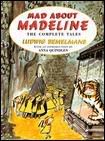
The morning before yesterday, my long-awaited book club order arrived: Mad About Madeline: The Complete Tales (Ludwig Bemelmans with an introduction by Anna Quindlen). This morning, I unwrapped it. I'm so pleased with it. Like all of the collections that I purchase, nothing is abridged or tampered with. It is Bemelmans straightforward. It also contains a selection of original sketches of Madeline from Bemelmans's sketchbook.
Click here for information.
Coraline

After three years of procrastination, I finally got around to reading Coraline by Neil Gaiman. I'm not finished but, to this point, I am thrilled by it. I love it. My husband finished reading it just after we purchased the hardcover in 2002 and then I just kept reshuffling it back into the shelves while searching for books to surf and then read.
Sunday, September 11, 2005

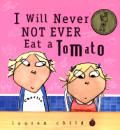
I love this book. The pace is rapid and the mixed-media, cut-and-paste appearance of the illustrations is imaginative and eye-catching.
Even the fonts are playful if just a little distracting to the reader.
From New York Times Book Review: "Very funny indeed."
From Publishers Weekly:
A delectable variation on the picky-eater-themed tale...Apt not to be satiated with one serving of the appetizing fare, youngsters will never--not ever--pass up a second helping.
Book Information:
Author: Lauren Child
Illustrated: Lauren Child
Publisher: Candlewick Press (2000)
Edition: First U.S.(2003)
Format: Softcover, 32 pp
Trim Size: 10.76 x 9.82 in
ISBN: 0-7636-2180-3
Reading Level: Ages 4 - 8
Illustrations: Mixed Media
Winner: Kate Greenaway Medal
Oppenheim Toy Portfolio Platinum Seal Award Winner 2001
Wednesday, August 03, 2005

Free Translation From the French of Charles Perrault
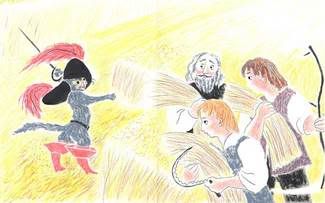
I was surprised to find so much information about Marcia Brown and her translation of Puss in Boots. In 1953, the book received a Caldecott Honor .
It's an ex-library copy. I have been meaning to read it this week and it has been sitting on the radiator beside my bed for ages.
If you're unfamiliar with the story, it is about a cat--bequeathed to a reluctant owner --who feels compelled to prove his worth in order to save his own skin. He, consequently, undertakes a number of tasks to this end.
The moral(s) of the story:
There is great advantage in receiving a large inheritance, but diligence and ingenuity are worth more than wealth acquired from others.
If a miller's son can win the heart of a princess in so short a time, causing her to gaze at him with lovelorn eyes, it must be due to his clothes, his appearance, and his youth. These things do play a role in matters of the heart.
(University of Pitts.)
Frankly, I have always found one of the messages disturbing: in the pursuit of one's own interests, the ends will justify the means.
The cat schemes, deceives, manipulates, intimidates--and worse--in order to render himself invaluable. He increases the worth of his owner and thereby ensures his own security.
Just one day after losing my beloved Avery, I might have waited to read it: this morning found me lying in bed, sobbing over the owner's cruel indifference and the cat's desperation.

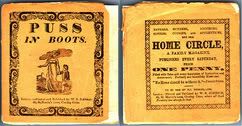
19th-cent. chapbook (University of Pittsburgh)
It is one of the stories collected by M. Perrault in Contes de ma mère l'Oye (Mother Goose Tales), c.1697*. There is an even earlier version (1630s) by Giambattista Basile in Lo cunto de li cunti overo lo trattenemiento de peccerille ("The Tale of Tales, or Entertainment for Little Ones").
In her interpretation, Marcia Brown's style permits the reader's imagination to soar as she provides enough detail to guide without being overbearing in her construction of the cat's world. We see glimpses of landscape and blushes of expression. It is not surprising, then, that she is "noted for her spare texts, strong images and the vitality of her experimentation with a variety of media ranging from her trademark woodcuts to pen and ink and gouache." (The Horn Book).
*The origin of the name, Mother Goose, has been a matter of dispute.
Tuesday, July 26, 2005
Katy No-Pocket
Author: Emmy Payne
Illustrated: H.A. Rey
Publisher: Houghton Mifflin Company
ISBN: 0395137179
Hardcover, 32 pages
Publication Date: 12/01/1973
Age Range: 5-8 years
Grade Range: Grades K-3
I love this book. Katy No-Pocket is not your typical kangaroo mother and this doesn't sit well with her. Through conversations with animal mothers of all types, she comes to learn the impossibility of being exactly like others in style or method. She begins to appreciate that her parenting can be just as effective as that of kangaroos with pouches.
There is so much to learn from this book: general knowledge about animals, the diversity of life and lifestyles, the importance of seeking help in times of trouble and the value of self-esteem.
For my own part, not being a biological mother, I can relate to Katy No-Pocket: there may come a time when an adoptive mother feels inadequate or harbours doubts about her abilities versus those of biological mothers; this amazing picture book illustrates that biology isn't necessary in tending to the needs of one's children or in loving them.
If the illustrations seem somewhat familiar, they are the creations of none other than one half of the team responsible for Curious George. The pictures possess the same colour range and style in the detail.
My own little one is too young to appreciate it fully but I intend to introduce it to her as soon as possible.